


A nose for tech: How the AFP is using sniffer dogs to tackle crime in the digital age


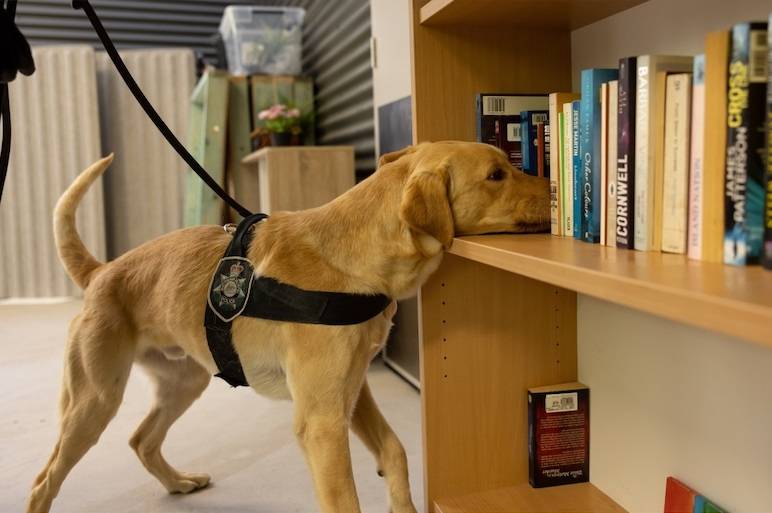

The yellow labrador is one of only 13 technology detection dogs working across Australia, using his incredible sense of smell to find tiny pieces of tech, often in serious and high-profile criminal cases.
“You see his whole body just ripple with excitement when he’s done the right thing,” says Mark Rice, the team leader of training and development at the Australian Federal Police (AFP) National Canine Operations Centre in Canberra.
“It’s infectious, you know — watching a dog do what they’re bred to do, finding something that you would never expect them to find,” he said.
“And then rewarding that dog and seeing the dog really benefit from your excitement is just infectious.
“I couldn’t imagine doing anything else, to be honest.”
Rice says his team is trying to make it as difficult as possible for Kirk to sniff out tiny pieces of technology — even something as small as a SIM card — but the dog is still “kicking goals at every turn”.
“Our Kirk, he’s a big personality. He has a really strong work ethic,” Rice says.
“We’re really pushing boundaries with him.”
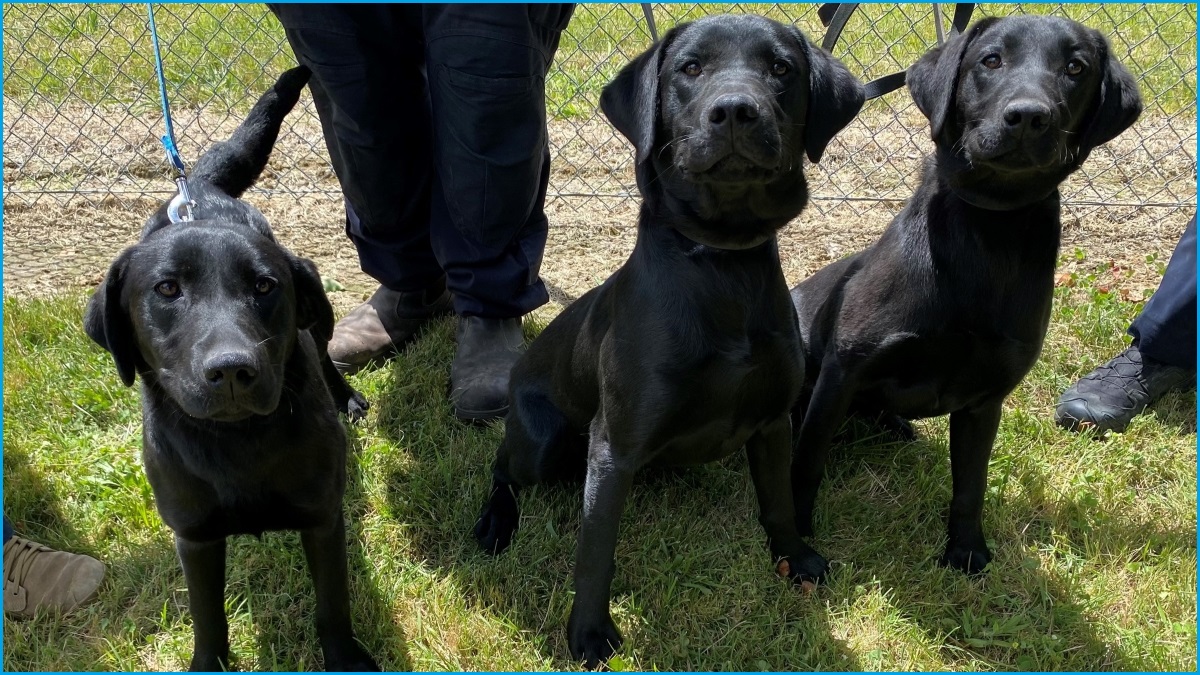
Puppies begin training at 10 weeks of age, and generally work for around six years. Photo: AFP / Supplied
The AFP says technology detection dogs have found everything from SIM cards hidden under the soles of shoes, USB sticks dropped in eskies, and electronic ankle bracelets buried in the ground, during police searches.
“It has revolutionised the way we do business,” Rice says.
Around 40% of a tech detection dogs’ time is spent working in child protection cases, but they are also used in counterterrorism, drug crime and state and territory police operations.
The dogs have been used to search the Victorian home of accused mushroom killer Erin Patterson, and one dog recently made headlines by finding the phone of missing woman Samantha Murphy at a dam near Ballarat.
Rice says Australia’s tech detection dog program, which began in 2019, was partly inspired by developments in the United States — but not everyone caught on as quickly as Kirk.
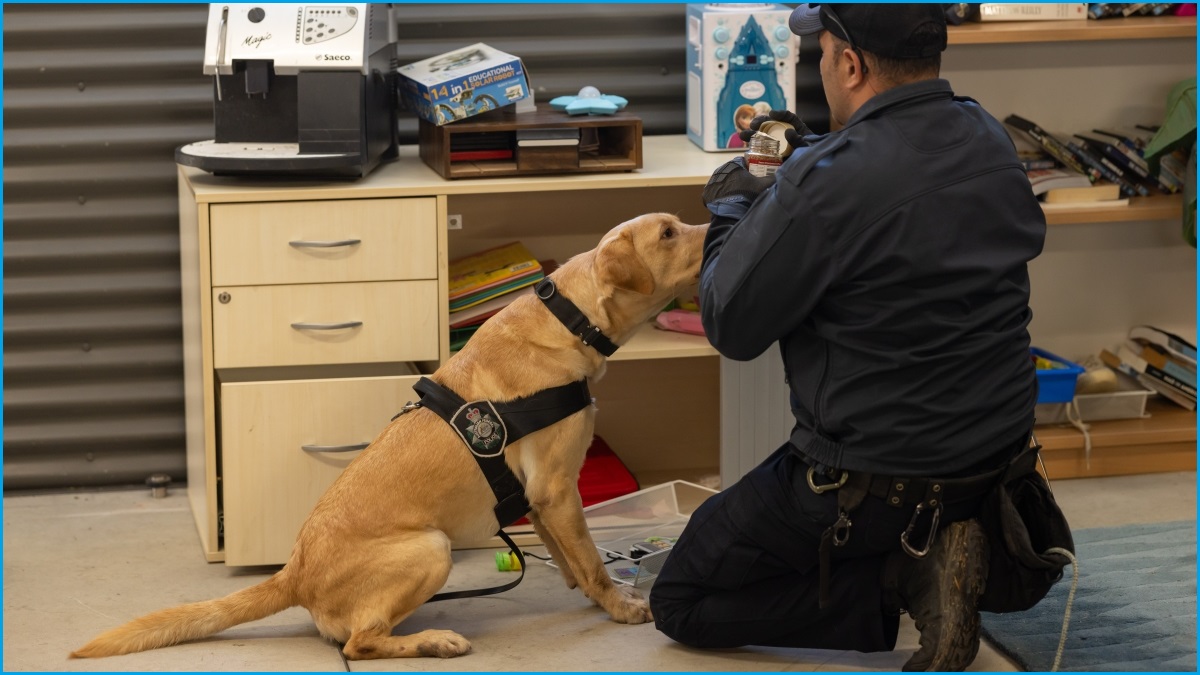
Kirk and his fellow tech detection dogs have been used in a number of high-profile cases. Photo: AFP / Supplied
Rice says Australian law enforcement became interested in technology detection dogs around 2015, when authorities in the US began successfully training such dogs and capitalising on their skills.
“At the time, everyone was pretty skeptical,” Rice says.
“Could a dog detect plastics and circuit boards in a world that’s full of plastics and circuit boards?”
In 2019, Rice and a colleague flew to the US for a fact-finding mission with local law enforcement agencies.
He says they left the US “with a really good idea” of how technology detection dogs could work in Australia.
“We were also really confident that with our training methods and the experience within our walls at National Canine Operations, we could really pump out a good product,” he says.

Technology detection dog Pedro gives a demonstration. Photo: AFP / Supplied
Rice says that even within the AFP there was “a lot of skepticism early on” about how effective tech detection dogs could be.
“For us, the big challenge was educating and networking within our own organisation,” he says.
“But success tends to paint the picture or advertise things best.
“So we kind of kept a lid on the program until we really got some strong runs on the board, before we really started advertising it, because within a policing environment, results speak for themselves.”
Rice says technology detection dogs have since “proven themselves on hundreds of occasions”, finding key evidence at crime scenes which can assist with prosecutions.
This year, the dogs have found over 180 items during more than 70 police search warrants to mid-May, according to the AFP.
“That starts with having really high-quality dogs,” Rice says, “and a really good understanding of how to train them.”
In the world of sniffer dogs, technology detection dogs are the best-of-the-best, Rice says.
That’s because it is considered more difficult to sniff out technology than it is drugs, weapons or explosives.
In fact, Rice says one of the most challenging things about running a tech detection dog program is “talent acquisition” — and he isn’t talking about recruiting humans.
“It takes a really powerful nose,” he says.
“We’re actually looking for dogs that genetically have a better detection capability.
“And then we teach them to associate between normal plastics of the world, and all of the plastics that are contained in [electronic] storage devices.
“But dogs that don’t quite make that cut can then filter off into our other disciplines.”
Puppies begin training at 10 weeks of age, and generally work for around six years.
Rice says training the dogs begins with “very simple exercises” which gradually become more difficult.
He compares the process to starting with some easy sudoku puzzles, before building up to very complex ones.
“The technology dogs do the hardest, most expert sudokus that there are to do,” he says.
These repetitive exercises begin with dogs having only a few small holes to stick their noses in and search, before the holes are gradually made smaller but greater in number.
Because electronic devices don’t usually have strong odours, trainers also use techniques to amplify the tech’s smell and help the dogs memorise them.
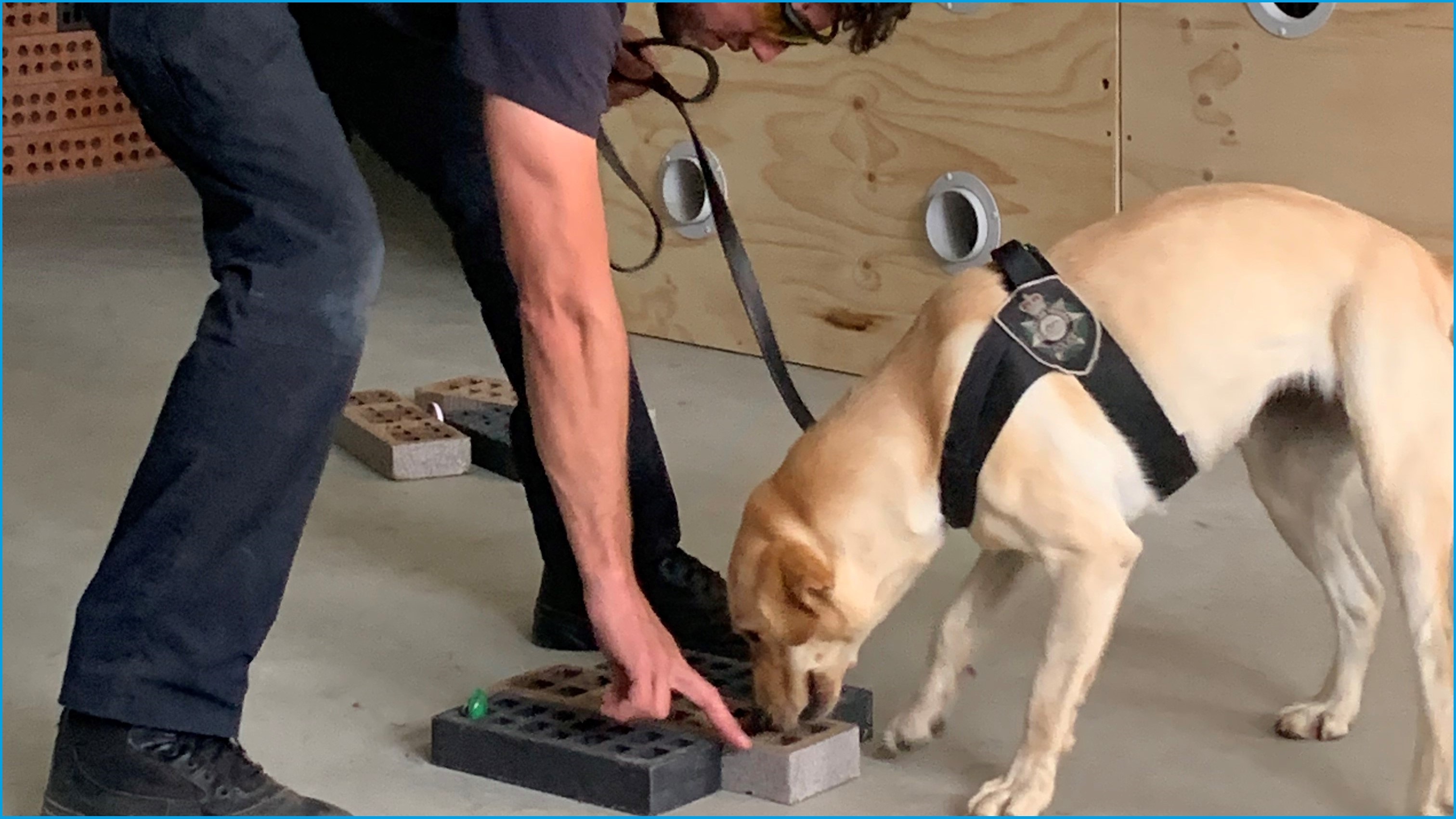
Mark Rice working with technology detection dog Doris. Photo: AFP / Supplied
One key technique, Rice says, is the use of something called a Herstik Wall.
“It’s kind of like PVC pipes in a wall with large apertures that you can isolate and amplify odors,” he says.
“We kind of use the dog’s nose as a vacuum and use air pressure to amplify things.”
Rice says dog trainers must be careful not to contaminate electronics too much with things such as oil from their skin, which can make things more difficult for the animals.
“We’re really careful that we’re always changing things up for the dogs, because pretty soon they start hunting for human scent rather than the technology devices,” he says.
As things get more challenging, the dogs are also put into situations which more closely resemble the “pressures” and “clutter” of working on real-world crime scenes, Rice says.
“There can be lots of debris around and very challenging environments where there’s other pets and other dogs living there,” he says.
“So we’re able to mimic that in a training environment and get the dogs ready to go out and deploy in the real world.”
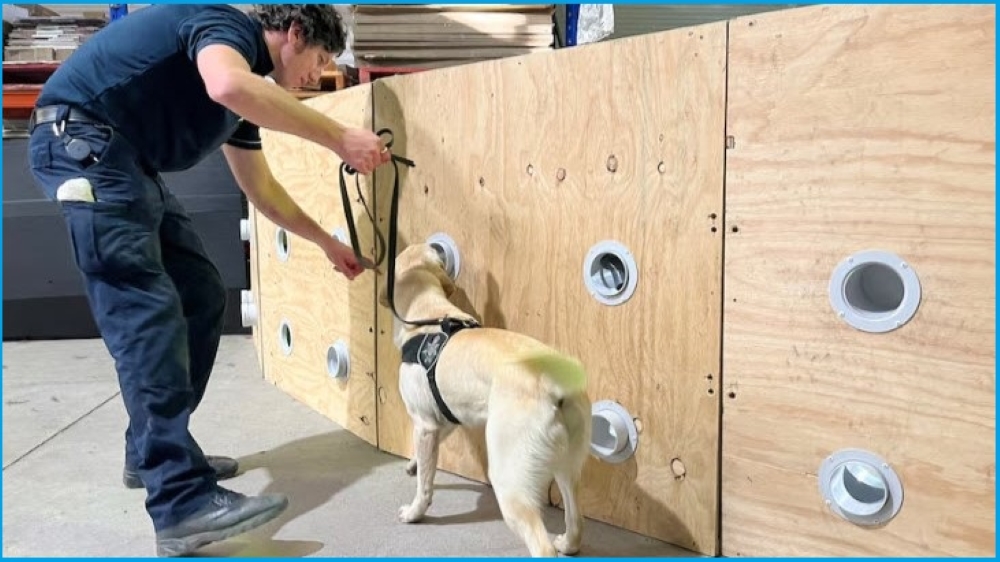
Mark Rice and Doris training on the Herstik Wall. Photo: AFP / Supplied
The AFP’s tech detection dog program received a $5.7 million funding boost from the federal government in 2021.
In May 2024, AFP assistant commissioner Alison Wegg said the dogs had been “instrumental in identifying evidence that has led to the conviction of a number of offenders”.
“Dogs conducting detection work sniff between five to 10 times a second,” she said.
“Their smell processing capacity is 40 times stronger than humans, and studies have shown they can find a scent as faint as one part per million.
“It is very important for us to continue to research and develop new concepts in canine capability to ensure we remain a step ahead of criminals.”
Some of the AFP’s first technology detection dogs will be retiring soon, but Rice says new ones will be ready to take their place.
He says that while running the program was initially seen as “very difficult”, the team have since “cracked the code” of sniffing out technology.
“It has really reinvigorated the team, and also just changed a lot of minds,” he says.
“We don’t know the limit of what a dog’s nose can do.”

Dr. Tim Barker is a senior research fellow within Health Evidence Synthesis, Recommendations and Impact (HESRI) and is the deputy-director of the Adelaide GRADE Centre. He is a research methodologist, systematic reviewer and clinical epidemiologist.
Comments