


Startmate Demo Day: Carbonaught is transforming farm fertilisers and carbon reduction using volcanic rock



Startmate held Demo Day for its summer 2024 cohort at Blackbird’s Sunrise in Sydney last week and Startup Daily is profiling the 10 startups involved.
Today it’s Carbonaught, which is using basalt rock as fertiliser for farmlands
In a world that has to radically decarbonise, we’re also faced with the herculean task of doubling our food production by 2050 — and that’s on a planet that’s currently losing a soccer field of productive soil every five seconds!
It’s a stomach-churning task, but there is hope for our planet’s farmers and foodies. Queensland-based startup, Carbonaught. has exploded onto the scene with a radical new solution.
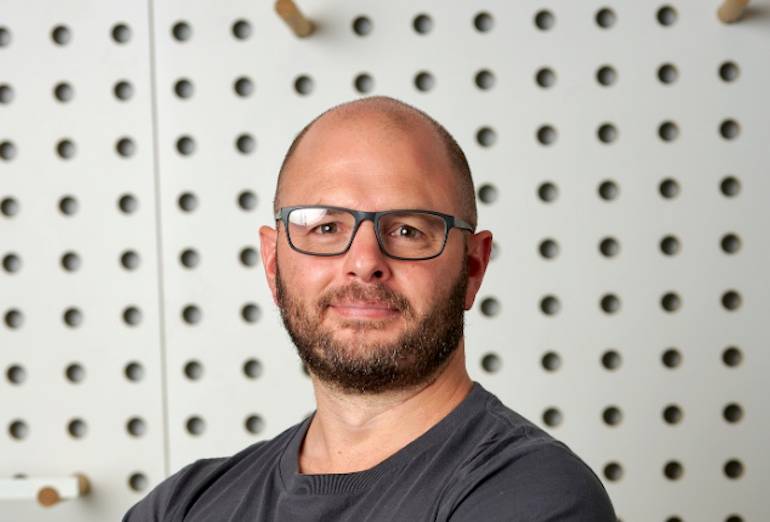
“The problem we are trying to solve,” says Andrew Pedley, cofounder and CEO of Carbonaught, “is how can we increase production, using less land, at a lower cost and with lower emissions?”
It’s no easy task, but Pedley and the Carbonaught team have moved mountains to achieve it.
“By unlocking the true value of Basalt, a rock that is found in abundance, we can deliver a fertiliser substitute that improves our farmers’ gross margins and maintains their productivity while also rapidly decarbonising them at the same time”.
“We’ve developed a very modern version of an ancient farming practice,” says Pedley.
“It’s a blueprint for a new food system, and it’s happening now.”
Before Carbonaught, Pedley and his cofounder James Lyons were working together for one of the world’s largest sub-mining service contractors.
“Our job was to figure out how mine sites could avoid losing money,” says Pedley.
“The biggest cost profile for our company was moving large rocks around mine sites. The piles were also a huge environmental liability. So we started to think of alternative uses”.
One day while they were working together, Lyons came to Pedley out of the blue with a radical, world-saving idea.
“He just came in one day and said, ‘I think I’ve solved the climate crisis. We need to go to New Zealand and cast this mountain into the ocean’. Which basically meant doing a drill pattern over it and plugging it with explosives.”
After researching the plan to decarbonise the world by slinging rocks into the ocean proved to be unviable, Lyons and Pedley came up with another idea.
Their new plan focused less on CO2-removing minerals and more on plant fertiliser.
“We realised that in Australia we’ve got a tonne of productive land surrounded by Basalt, so that means we can scale very quickly,’ said Pedley.
“Then it just became a unit economics problem, which was our background”.
Pedley and Lyons pitched their mountainous vision to their superior, but it was swiftly rejected and the idea lay dead in the dirt.
The belief in their vision without a pathway to action left Lyons and Pedley with a growing sense of frustration.
“The mining companies have all the big toys and all the big industrial processes, incredibly skilled people who know the geophysics of the land and could really make a difference, but are just making way too much money from coal and oil to do anything,” said Pedley
But the Carbonaught team were determined to be ‘on the right side of history’.
“My cofounders and I just thought, we have the skill set and the outlook to go and fix things, it’s on us to have a crack,” said Pedley, “James told me he was thinking of leaving the company to pursue the idea and I told him if he left, I’d go with him”.
While they were developing their new business idea, Pedley heard about the launch of a new global competition. The X-Prize for Carbon Removal — a project founded by Peter Diamandis and backed by Elon Musk — was offering a prize pool of US$100 million for businesses that could effectively rebalance the Earth’s carbon cycle.
After entering a 10,000-word submission backed by experimental research and independent evaluation, Carbonaught was shortlisted as one of the top 25 projects in the world.
“That was a significant turning point for us,” said Pedley,
“They have a really rigorous review process. We’d thought we were right for a long time, but that external validation was really important, and we’re still in contention for the major prize”.
Around the same time as the X-Prize announcement, the Carbonaught team was approached by VC firm Antler and offered significant investment.
They were ready to scale the mountain.
Basalt has been used in agriculture for thousands of years, but Carbonaught has discovered a chemical reaction that gives it a very modern makeover.
“If I held up a bunch of basalt to you, the market value of that basalt is about $10,” says Pedley,
“Our technology converts that basalt to being worth about $120”.
“As our basalt breaks down it releases a whole bunch of benefits. There are soil-building nutrients within the soil layers, and there are also minerals in the rock that grab CO2 and bind it up forever as bicarbonate ions.
“The nutrients act as a vitamin pill for plants and reduce the reliance on synthetic fertiliser.”
Unlike organic carbon removal options, Carbonaught’s approach delivers permanent carbon removal, which means even if there is a bushfire the carbon won’t be released back into the atmosphere.
When compared to Direct Air Capture technologies, like the ones that have received over a billion dollars of investment from the US government, Pedley suggests Carbonaught has a number of advantages.
“I’d say for every dollar invested in DAC, we could remove three more tonnes than DAC would.”
Unlike the DAC technology that is yet to be proven as economically viable, Carbonaught is “ready to go now”.
It’s not just ‘ready to go,’ it’s ready to scale rapidly.
“We could neutralise the Queensland sugar industry by 2030 if we moved now,” says Pedley.
“And we could do it while delivering better gross margins to the farmers and helping protect the Barrier Reef through reduced synthetic fertiliser use”.
According to Pedley, Australia has the potential to be a basalt superpower and it’s an opportunity we shouldn’t squander.
“I really want to drive the point home that Australia, through sheer dumb luck, has everything going for it,” he said.
“We’ve got all of this productive farmland, and right next to it, we’ve got a lot of rock.”
Beyond making existing agriculture more economical and planet-friendly, Carbonaught’s technology could save threatened industries and even play a catalytic role in systems-changing innovations.
“If we look at wine, for example,” says Pedley.
“I’d say we have, maybe two to three years before culturally significant vineyards are ripping up their vines. We can go to work in that time period and shift the unit economics to help strengthen that industry with options”.
That shift in unit economics could also accelerate the update of new sustainable industries.
“Take sugar cane for example, changing the costs of that could make Sustainable Aviation Fuel price-competitive and play a part in a whole new industry.”
While still in its early stages, Carbonaught has already made significant strides.
“We’ve moved from a honey pot with some rock in it to over 200,000 hectares in our pipeline, 55,000 hectares under NDA, a carbon credit pipeline sitting at about $6 million, and over a million tons of rock under MOU”.
The startup has already formed a long-term strategic partnership with Lava Blue and Howe Farming Enterprises, a Queensland-based farming group with aspirations to be the leading supplier of carbon-neutral produce.
“I think when the farmers saw that we were putting our own money at risk by deploying the first pilot-scale development off our own balance sheet, it helped them to believe in us because it showed we believe in ourselves”.
Carbonaughts belief extends beyond their pilot projects, they want to be captain of a new global industry.
“Within 5 years I hope we will have moved Queensland agriculture, or even all of Australian agriculture, onto a scaled, low emissions blueprint that will be feeding the world,” says Pedley.
“You know that feeling you got as a kid watching Kieran Perkins dominate the swimming world in ‘92? I want that for our primary producers”.
* Apply for Startmate’s next Accelerator cohort here.



Comments