


Your watch will soon know more about your health than your doctor




It’s a big prediction for a device category that only hit the mainstream in 2007, when Fitbit gamified the working day and turned bragging about step counts into a social talking point – and paved the way for 2015’s release of the Apple Watch, now over 100 million units strong.
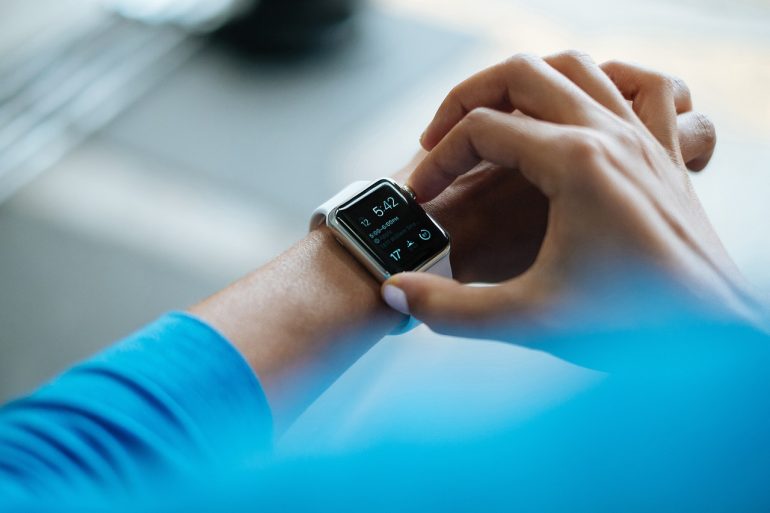
New sensors – think ECGs in 2018 and an oxygen saturation sensor in 2020, which was particularly timely given COVID-19’s impact on lung function – have evolved the devices into ubiquitous health monitors now worn by 36% of Australians.
“The proliferation of wearable devices in recent years has been a breakthrough in the patient care side for clinicians and individuals,” Dr. Matthew Ahmadi, deputy director of Sydney Uni’s Mackenzie Wearables Research Hub, launched in 2023, said.
“There’s a lot of information that they’re now being made aware of, so they can see what changes they need to make to improve their overall health – to be more aware of their vital signs, and how things they do day-to-day can actually have big impacts on their health.”
This data is a cornucopia for doctors, Ahmadi said, who otherwise have to rely on their clinical observations at intermittent visits and previously had patients wear sensors like cardiac holter monitors, for short periods.
Building such functions into wearables “allows physicians to get continuous information on a patient’s health,” Ahmadi explained, “rather than just doing a one-off visit when you might miss a lot of information about what happened in the preceding days, weeks, and months.”
Yet there is a caveat: today’s wearables, supported by powerful smartphones and AI algorithms, flood users with minutiae and “sometimes give out indications of health values that aren’t substantiated by any evidence; they’re just a cool number to try and sell devices.”
Wearables have become catalysts for a proactive approach to healthcare based not on monitoring what has happened, but predicting what is about to happen based on current health indicators.
Smart algorithms already detect changes such as short and long-term changes in resting heart rates – an indicator of overall health – while simplified Apple Watch ECGs can pick up markers suggesting serious conditions like atrial fibrillation (AF).
The University of NSW recently tested wearables with 11 Indigenous NT elders and found smartwatches were a “comfortable, convenient and culturally safe way to monitor heart health” – including detecting AF in one participant who soon underwent lifesaving surgery.
There’s more to come for wearables – particularly as they are integrated with AI large language models (LLMs) that will, a recent Gartner analysis found, give wearables “agentic capabilities” that make them more proactive and relevant.
LLMs “can analyse vast amounts of physiological wearable data and then interconnect this data with lifestyle and other contextual environmental information,” Gartner said, “to significantly enhance health insights and decision making.”
Forthcoming sensors will add new data streams to the mix, with Apple said to be considering how watch bands can be used to add new sensors, potentially, blood pressure or blood glucose monitors.
Such capabilities would be indispensable for sufferers of chronic conditions like hypertension and diabetes, who must regularly use blood pressure monitors or undergo invasive finger prick testing or continuous glucose monitoring.
Innovative nanotechnologies are producing new biosensors specific to one type of molecule, which can detect hazardous airborne substances, concentrations of medications, and indicators of mental stress and disease in our sweat, breath, saliva, and tears.
Don’t spit on your smartwatch just yet – but as such technologies are refined and then integrated into wearable form factors including watches, smart rings, and even adhesive smart patches, experts expect they will become front-line healthcare tools.
By 2028, Gartner has predicted, 45% of advanced wearables will be able to accurately monitor at least one chronic disease – with such devices identifying twice as many serious health conditions as doctors do.
This applies particularly to remote communities, where access to doctors and diagnostic services is traditionally poor and wearables promise to empower patients with sensors whose data can be sent to doctors anywhere.
A recent University of South Australia review found wearables “were actually quite surprisingly accurate in detecting” AF and COVID-19 by analysing multiple data points, noted Dr Ben Singh, a research fellow with the UniSA Allied Health & Human Performance unit.
That accuracy came not from the devices telling users that they had the conditions, but from researchers who built specialised algorithms to analyse the wearables’ data – and found that wearables can be as accurate as specialised medical sensors.
Still, Singh said, “we’re probably not going to reach a state where people are going to be relying on these devices solely to diagnose them with a heart condition. It’s more a case of using them to prompt the user to go see their doctor, get a medical test and be diagnosed.”
Wearables’ popularity is creating other issues, with the likes of Diabetes Victoria and the US FDA recently warning of the health risks of buying online devices that claim – falsely and dangerously – that they can non-intrusively measure blood glucose levels.
Regulatory issues delayed Australian availability of a new feature that allows Apple’s AirPods Pro 2 to be used as clinical-grade hearing aids, with the Therapeutic Goods Administration only recently approving the functionality despite its availability overseas.
Similarly, Apple recently stopped selling its Apple Watch 9 in the US, and disabled Apple Watch’s generally accurate pulse oximetry features, after losing a patent lawsuit.
Other issues impede wearables’ transformation into proxy medical practitioners: for example, healthcare data is heavily protected by privacy legislation, complicating its sharing and raising questions about the implications of adding AI to the mix.
Yet with most Australians found to have far less than optimal health literacy – one pre-fitness tracker government assessment found that just 41% of Australians aged 15 to 74 have adequate health literacy skills – increased awareness and use of wearables can only help.
“Technology often advances faster than we can prepare for it to implement protocols or safety measures,” Ahmadi said.
“Hopefully, by the end of the decade, we’ll have caught up on the patient care side and everything is in harmony again.”
“The most important thing is that the individual is getting better treatment and the care they need to improve their overall health.”

David is Associate Professor and Australian Research Council Future Fellow in the School of Geography. He combines qualitative research on embodied practices with social theory to explore the social, political and ethical consequences of mobile lives. His research draws on cultural geography and mobilities research to investigate contemporary social problems involving mobility-labour relationships.
Comments