


Winkd is a dating app looking to help connect users at a venue in real-time
Predominantly aimed at LGBTQI users, Winkd is a dating app looking to bring the act of meeting someone back to its roots.



Between the likes of Clinks, TwoPeas, and Epic Catch, the Australian market is saturated with locally-developed dating apps. Then, of course, there are the global juggernauts such as Tinder, Bumble, Grindr, Her, Happn, and Coffee Meets Bagel.
All of these mean that the act of standing out is an ambitious task, but it’s one that Sydney startup Winkd is eager to meet.
Predominantly aimed at LGBTQI users, Winkd is a dating app looking to bring the act of meeting someone back to its roots, by stripping away dense search algorithms and profile descriptions and instead restrict users to a singular, compact venue.
Users who check into a compatible location are able to see other users in the corresponding area and ‘wink’ at them to indicate their interest. If two users wink at each other, they’re provided with a slim twenty minute period to chat and decide if they want to meet face-to-face at the venue.
Diana Kalkoul, the startup’s cofounder, said Winkd cuts out a lot of the excess complications within existing solutions that use detailed profiles and search radiuses in order to provide a raw connection experience.
“It’s about leveraging the technology we have today to reignite that traditional spark of meeting someone for the first time and knowing little about them. It really encourages people to go out and find more information about another person,” said Kalkoul.
Kalkoul said the idea for the platform emerged from wanting to fulfill her “fantasy” of connecting on a dating app and meeting someone straight away.
Between reflecting on the experiences she and her friends had when using existing dating apps, the entrepreneur recognised the idea of being able to connect in a specific, smaller location as an industry gap to innovate in.
“We tried used existing apps, and couldn’t connect with people in small spaces. Often if we reduced the radius on Tinder we’d get no results at all,” she said.
Assisted by University of Sydney’s Incubate program, which provided mentorship and $5,000 in seed funding, Winkd begun development late last year.
Currently in a closed beta phase, Winkd will only function within set locations.
Kalkoul said that so far, the business has secured a location in Newtown as well as a few other unnamed venues around Sydney. Using location services, the app checks if a user is near an event by “piggybacking” off the location detection algorithm used by Google Play services.
“We’ll be limiting the amount of places you can check into, since we want users to be able to find each other in the same space. And you can only check in if you’re within 50 metres of the place,” explained Kalkoul.
A user first signs up through Facebook verification. While apps like Vampr, a connection platform for musicians, look to curate a plethora of user data from Facebook to inform its search algorithm, Winkd will only take a user’s first name and profile picture.
Kalkoul explained this is because the app doesn’t use any search parameters to filter users, instead allowing them to see anyone in the nearby venue using a “carousel” model, where users can flick back and forth between different profile pictures.
Further in the signup process, a user will be asked to specify whether they are ‘male’, ‘female’, or simply just ‘human’ in a bid to be as inclusive as possible.
Once a user finds someone they’re interested in, they can tap their image to send them a wink notification. If two users wink each other, they’re given a twenty minute time frame to chat before their conversation disappears.
Asked whether this picture-only feature lends itself to a superficial method of dating, Kalkoul said this component is intended to resemble the “basic human nature behind dating”, where people see and meet each other without knowing anything about them, beyond their physical appearance.
Stripping away user information does bear security benefits, however, as a user’s information cannot be obtained, even if a match occurs. Kalkoul said this feature is especially beneficial for women, who often run into issues when their information is compromised on dating apps.
Kalkoul didn’t mention if the app would have a reporting feature to flag antagonistic users, however said the app’s current locations ensure safety in numbers, where a venue holds a “duty of care” over the people within it.
This protective sphere won’t pertain everywhere, however, as Winkd does have plans to launch into other public locations, raising safety concerns thereafter.
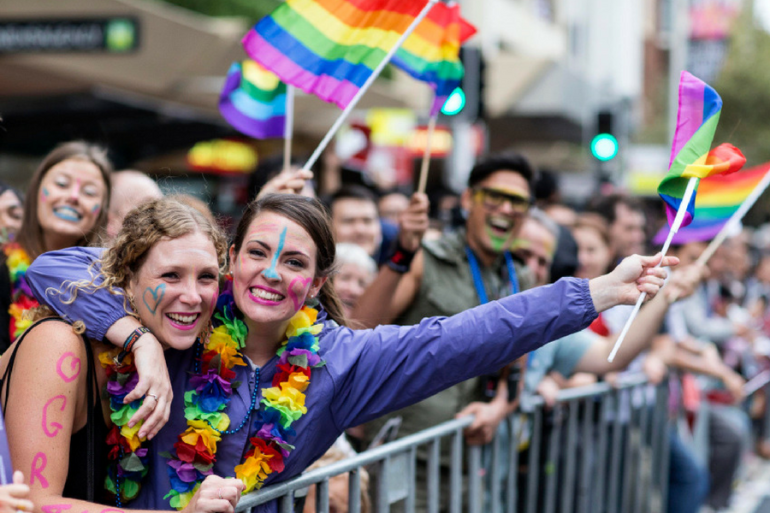
Kalkoul said the business is in talks to partner with Mardi Gras and launch the app during the this year’s event, where the app will function at “common points” such as Oxford Street and other landmarks.
“We will be reaching out to those bars, venues, and promoters to let them know we’ll be listing them on the app,” said Kalkoul.
“We’ll also have marketers in venues to let them know they can download the app.”
Partnering with multiple venues will be vital to the startup’s success; Kalkoul said Winkd will use a non-subscription revenue model, instead generating earnings from venues placing promotions on the platform.
“We’ll probably never charge users. A lot of the feedback we’ve seen in other dating apps is that they hate paying for features that don’t get them anywhere,” said Kalkoul.
The focus of the app is similar in ways to Happn and Clinks. Happn too focuses on connecting users who cross paths, though Winkd differs with the real-time meeting.
Clinks, meanwhile, encourages like-minded users to meet up at a venue rather than swipe all day by limiting how much time matched users can spend chatting to each other and prompting them to ask the other user out for a drink. Clinks then presents them to a map to find a venue, showcasing deals and offers from partner venues.
Now approaching the end of the incubator program, Kalkoul said Winkd will look to kick off by onboarding permanent venues, growing its user base, and eventually expanding to other Australian cities.
Image: Marti Gras Festival. Source: Broadsheet.

Comments