If some savvy entrepreneurs being able to sell canned bottles of fresh outback air was any indication, the Chinese market has an increasing interest in purchasing authentic, high-quality foreign products across a broad range of categories.
A report from China’s National Bureau of Statistics studying the nation’s 2016 economic data found that the Chinese ecommerce industry generated AU$1 trillion (¥5.16 trillion) last year, an increase of 26.2 percent from 2015.
The report also revealed that Chinese consumers prefer “premium” quality products, which they often obtained by ordering imported goods online. As a result from this increase, according to the report, Alibaba’s Tmall Global ecommerce marketplace, which sells premium imported goods, more than doubled its sales last year.
Tapping into the growing demand within China for international products is Sydney-based startup DaigouSales. Integrating with popular Chinese social media platform WeChat, the startup offers an ecommerce marketplace allowing Australian brands to sell their products directly to Chinese consumers.
Helmed by entrepreneur Mathew McDougall, a long time player in the Chinese market, the business looks to provide a simplistic alternative to a growing process used by Chinese consumers to access quality international products.
Called ‘Daigou’, which translates to ‘buying on behalf of’, the process involves overseas shoppers buying items on behalf of a buyer based in China.
Generally occurring over WeChat and exclusive Diagou marketplaces, the service, according to McDougall, has become increasingly popular due to many Chinese buyers having a low trust in online websites selling international products.
McDougall took to explaining how the Daigou process works.
“The daigou buyer goes to a retail outlet, gift shop, or pharmacy to purchase this product, after which they take the products to a ‘daifa’, [or a] Chinese postal shop to package and ship,” he said.
“The products are then generally airfreighted to China overnight, then spend five to 10 days being cleared through customs prior to being delivered to the door of their buyers. Payment for the products is made via WeChat Pay.”
Seeing his wife spent “incredible amounts of time” partaking in the trend by purchasing Australian products for family and friends in China, McDougall wanted to develop a way to automate the process, removing the intensive manual labour element.
Considering how “ubiquitous” WeChat was with Chinese consumers, and that the Daigou practice was already commonly completed through the social media platform, McDougall sought to set up DaigouSales through WeChat.
“When ‘daigous’ use the DaigouSales platform, they don’t have to travel to purchase, worry about collecting payments, nor do the shipping,” he said.
Key to building a marketplace for a Chinese audience, according to the founder, was the element of “trust”, as well as ensuring that the platform’s design fit into the correct framework to target Chinese consumers.
“The Chinese market is different in almost every conceivable way, from the types of platforms Chinese use for social media to the types of consumer behaviour they exhibit,” said McDougall.
“Ninety-two percent of Chinese netizens use some form of social media, with many Chinese consumers regularly posting messages in WeChat, online forums or blogs. A mistrust of traditional media channels and advertising, along with the heightened significance of networking within Chinese society, makes China especially suited to marketing through these types of social media. For example, many Chinese consumers often use online communities to evaluate products and services they are planning to buy.
“There is also such widespread fear by Chinese consumers about food quality and product fakes that many of the Chinese middle class – some 500 million – would rather pay a premium to their ‘daigou contacts’ to purchase or send from Australia as this product is absolutely known to be genuine and authentic.”
Gaining access to the DaigouSales app by applying to the startup, businesses are able to set up their store by uploading product pictures and information, inputting pricing, and customising their layout.
Brands pay a monthly subscription fee to host their store on the platform, and also pay a 2.5 percent transaction fee on each product sold.
Calling it a “low risk/cost” approach for brands, McDougall explained that traditionally the process of expanding an online store into the Chinese market can be substantially complex, thanks to the differences that extend beyond language.
“The challenges of a huge market with a different business culture and language are compounded by a controlled currency and relative newness of international trading in modern China,” said McDougall.
“Regulations and bureaucracy are a common challenge experienced by Australian companies wanting to establish a presence and sell in China, but using direct to consumer as your initial sales or marketing channel will provide some valuable insights about the way Chinese consumers interact and consumer your brand. Any critical product issues can be addressed prior to taking next steps such as establishing your Chinese company.”
Developing ways to navigate the Chinese market has also been a goal for Sydney startup Sinorbis, which has constructed a number of strategies designed to help Australian businesses develop an online presence in China.
A cloud marketing platform, the startup works with clients such as the University of New South Wales (UNSW) to help educate people on how to develop a comprehensive digital marketing strategy tailored to China. Alternatively, clients can have Sinorbis develop the strategy, while also having the startup develop online content for them.
Explaining that the Chinese market has undergone an “explosion of demand” for overseas products and services, Sinorbis founder Nicolas Chu agreed that navigating the Chinese market was nothing short of complex.
“You really need an intricate knowledge of the Chinese market or alternatively, be able to invest money to have a team of the ground in China to do this stuff stuff for you,” said Chu.
“No Google means no Google Analytics, so you can’t even properly understand SEO or how campaigns are running without re-learning the Chinese search engine Baidu.”
“Other models work differently too. Say for example subscription models like what Netflix uses, they don’t work well. Chinese people are generally unwilling to commit to paying, especially if you’re an unknown startup or brand.”
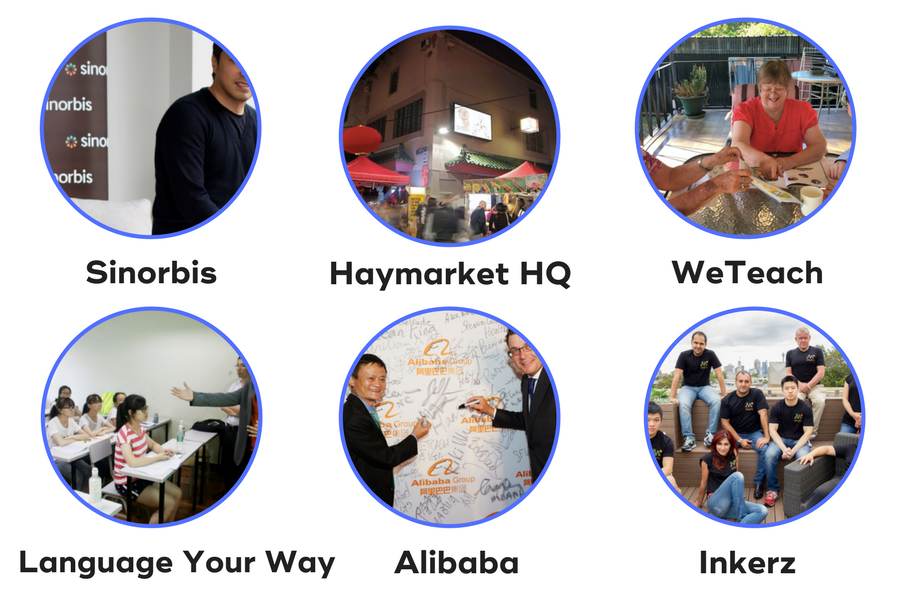
Who else is helping facilitate connections with China?
Sinorbis | WeTeach | Language Your Way | Haymarket HQ
To help global businesses further their venture into the Chinese market, DaigouSales offers a series of ‘brand programs’, which includes content marketing and event management services which are tailored to targeting Chinese consumers.
The startup also offers a VIP daigou management service, which offers brands “greater influence and reach” online.
Discussing which products have fared best on DaigouSales, McDougall said there has been a leading uptake of infant formula, vitamins, skin care and cosmetics.
“But we are also seeing demand in baby clothing and some grocery lines,” he added.
Moving forward, the startup will be looking to help more Australian brands shift their products into China, while expanding its offering to the Chinese consumers on WeChat.
Image: Mathew McDougall. Source: Supplied.










Comments