


How these Australian scaleups are investing in company culture
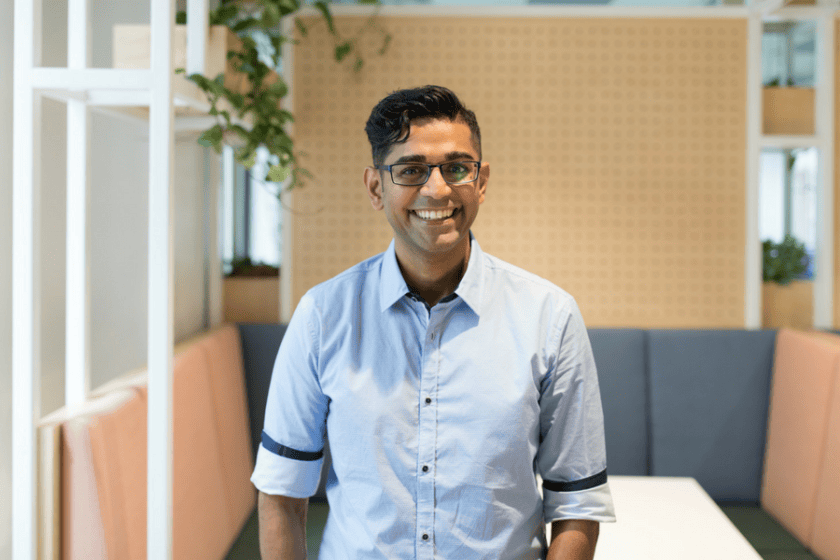
Looking to take its company culture to the next level as it scales up is Airtasker, which recently appointed Mahesh Muralidhar as its new Head of People Operations.



The list of Australia’s top companies, revealed by LinkedIn last week, detailed a list of corporates and the perks they offer to keep staff content, from PwC offering ‘floating public holidays’ allowing employees to decide whether to take designated public holidays off or choose another day, to REA Group having a designated space in its Melbourne office for dogs; and CottonOn encouraging staff to take ‘Empower Hours’.
A handful of names have been at the top of similar lists ranking startups from year to year – your Canvas, Envatos, and Atlassians, offering staff everything from flexible work hours to in-house chefs, personal development days, and more.
Looking to take its company culture to the next level as it scales up is Airtasker, which recently appointed Mahesh Muralidhar as its new Head of People Operations.
With the platform now counting more than one million community members, CEO Tim Fung said the startup has, since its launch in 2012, focused heavily on building traction and scaling the culture of its online marketplace.
“But as soon as we took a moment to come up for air, we discovered that we had not done a good enough job focusing on the happiness of our own people,” he said.
“When we finally took a moment to ask our team what we could do better, we realised that a focus on people ops was going to be our number one priority for building a truly great company.”
According to Muralidhar, this recognition from Fung that the company had failed in a particular aspect is emblematic of the culture they want to build going forward.
“The thing about Tim is that with him, what you see is what you get. He’s got no problem saying, ‘I screwed up, what’s next?’ We’ve now crystallised our values very clearly, and he was very vulnerable with the whole business, going on a bit of a personal journey to sit down with us and tell us, ‘these are the reasons why these values are really important to me’, one of them being owning it and holding yourself accountable for your actions,” he said.
This makes Muralidhar’s job easier, if only because he’s quite particular about his job title.
“I think of myself as head of people operations, and see the head of culture as the founder,” he explained.
“It should always be the founder. I always cringe a little bit when I see other personalities titled as head of culture. My role is to facilitate and promote culture, which is defined by the founders; it has to be an extension of them.”
This was a lesson he learned from Melanie Perkins and Cliff Obrecht at Canva, where he served as People Lead for two years, having been convinced to leave his own startup, UReferJobs, in the middle of raising a seed round thanks to the clarity of their vision.
Of course, the idea that a founder sets the tone for a company’s culture hasn’t had the greatest of press recently, with the blame for Uber’s poor run of form placed on Travis Kalanick, but Muralidhar said the opposite is true at Airtasker.
“The highest value that we have is that people matter, and it ties very clearly into our business and business model, and Tim holds that very dearly. I can see how excited he is when he talks about our values, because it’s this wonderful thing he’s got now, a framework through which to think and make decisions. And everyone interprets it differently,” Muralidhar said.
Muralidhar’s own interpretation focuses on ensuring employees can tick off five core criteria: they know how to do their job, they know how they can grow and be challenged in their job, they feel safe, they know who to turn to for help, and they feel they are being rewarded fairly.
Decisions around these factors must be data-centric for Muralidhar; he accepts the place of free lunches and the ubiquitous ping pong table, but wants to look at how the various perks and activities offered by the company assist employees in their work, and their feelings about it.
“There’s been a trend towards investing in these objects with the hope that their purchase will instantly improve culture in the workplace. But these objects always need to be tied to an economic objective,” he said.
“Investing in perks is a great idea, provided you’re clear on the tangible benefits those perks are creating for your people, your culture and your brand.”
For Muralidhar, the focus on data is an attempt to ensure various biases are kept at bay; for this reason he said he’s “really against” the notion of ‘culture fit’, rather preferring to look at job candidates in terms of their ‘culture add’.
“For us as an organisation too, it’s still early, we’re still cementing and setting our culture. We can’t have someone else come in and say they fit into this supposed framework we’ve created…none of that has really happened,” he said.
“What you want to do is constantly and continuously invest into impressing into an organisation a clear and consistent culture based around your values and your vision and then keep reaffirming through x number of activities and conversations and make sure you can work with the people you’re bringing on board, and you can see them adding to the culture.
“The notion that in one interview or in three or five questions you can assess culture fit, I really struggle with that.”
The challenge of defining and hiring for culture and values is one Townsville-founded, Sydney-headquartered SafetyCulture is also currently working through.
The startup, which raised a $30 million Series B round last October, also recently appointed a new Head of Talent, Nick Ingall.
With experience across companies including Atlassian, AdRoll, and Spotify, where he oversaw the company’s growth from around 100 employees to 1,200, Ingall said the main difference between his past work and his role at SafetyCulture is the passion he has for the product and the potential it has to change people’s lives.
“One of our internal messages is around ensuring people get home from work every day; when you consider the impact of our product, it makes it pretty easy to get out of bed every day and come into the office,” he said.
Like Fung at Airtasker, the vision for SafetyCulture and what the company represents is being driven by its founder and CEO, Luke Anear, who Ingall met soon after the company announced its Series B.
“Usually at that stage, the validation of the product and revenue stream is evident, so I knew that was already there; what I didn’t know first hand about was the passion and vision Luke was driving through the business,” Ingall said.
“For him, while he wants to build a very healthy business that scales effectively, at the end of the day he’s very focused on ensuring we disrupt this safety industry for the better, and that was very evident in conversations with him and other individuals who had already joined and who were captivated by this vision.”
With that $30 million in its back pocket, SafetyCulture has a range of perks on offer to staff around its four global offices, from catered lunches Monday toFriday to flying everyone to Townsville for company-wide hackathons, and allowing office dogs.
Travel is a particularly big focus for the startup, but beyond the Townsville trips and flying its global staff to Sydney for a few days of Christmas festivities last December, much of this focus lies on developing countries.
Almost a dozen staff members earlier this year spent a week in Bangladesh, visiting factories to meet with locals and hear how they had been affected by accidents caused by poor safety structures and procedures.
The goal was to have the group, made up primarily of engineers and people working on product, understand the material impact the features they work on each day can have on someone’s life – or death.
“It’s a very bold move for our CEO and founder to want to have the team to understand on a very emotional level why we’re doing the work we do,” Ingall said.
There was resistance from some; Alan Stephensen, an engineer based in the startup’s Townsville office and one of the startup’s early employees, said Anear spent some time convincing him to go on the trip.
“I actually didn’t want to go. I was sceptic of the whole experience because I wasn’t sure what value we would be getting out of it, and it sounded like a fairly expensive trip; I wasn’t sure how it was going to pan out, and it’s not like we have a huge customer base in Bangladesh, so I wondered why we were going,” he said.
Expecting “nothing at all” from the trip, Stephensen said he came back a convert.
“It’s hard to fathom their safety standards; in Australia, Europe, the US, there are standards in place because we don’t want people to die on a worksite, but in Bangladesh and other developing countries the cost of human life is so low, that they just keep replacing people. It was eye opening,” he said.
As an engineer, the experience allowed Stephensen to better understand the technology available in Bangladesh and how to better develop for these standards.
His buy-in to the trip means Stephensen in fact has no interest in taking part in any of those planned across the rest of the year.
“I think it’s better that other people go to spread the experiences around the team. I just want people to experience what I did because it definitely was eye opening and I think it will help us develop better products.”
While also investing heavily in talent retention and training and development programs, giving employees a transparent view of what their career at SafetyCulture will look like in two to three years, Ingall believes the company’s mission is its biggest drawcard for job applicants, rather than the kinds of perks offered by other Australian companies.
“There are a lot of flashy brands out there with really cool perks, which is amazing, but we don’t have that…we know we compete very well in market on certain topics, and other companies like Culture Amp and Canva compete very well on others,” he said.
“For us, it’s about giving people the opportunity to identify what do they want at this point in their lives, and ensure they know all the options available out there to them so that four months in, they don’t start thinking, actually I wouldn’t rather working with this other platform. Rather, they know what they’re getting into and where they and our product fit.”
The idea of giving employees a purpose is core to the way Mike Pritchett, cofounder and CEO of video production startup Shootsta, is trying to run his company.
He and cofounder Tim Moylan sought to invest in a positive office culture from day one, giving employees flexibility, shouting the team coffee for the Monday morning WIP meeting, and kitting out the office with, of course, the requisite ping pong table.
To make sure the symbol for fun office culture doesn’t actually become a tool that breeds exclusion, they also organised a daily 12-minute tournament at 2.30pm to ensure everyone takes part.
“The biggest thing when it comes to culture is actually having a goal around it in the first place,” Pritchett said.
“As an entrepreneur you get to dream up an idea and then create something that didn’t exist before, and that something is actually a huge part of people’s lives as they move forward. Where you work is a huge part of who you are and what you’re doing at that time in your life; people don’t stick around forever in a job these days, but the time that they are with you is an opportunity to assist them in growing, in their journey.”
Having met his wife in a previous job, Pritchett believes he has a “huge privilege” as a business owner to be part of people’s lives and have the potential to change their lives like his was.
“I’ve always had it as a goal to try and make sure that I create a work environment that people really look forward to coming back to on Monday morning, rather than dreading it on Sunday night,” he said.
As the business gets set to open a new office in Singapore over the next few months, Pritchett said he is transparent with staff about Shootsta’s operations and finances. For the company’s millennial staff, this is gold.
“Some business owners would fall off their chairs if they heard what I share with my team, but for an editor to sit down and edit a video, that’s one thing, but for them to sit down and see what difference a video makes to the business moving forward over the next few years, that’s where millennials are different,” he said.
“They want to know, what am I doing this for, and why? When you give them the why, it’s powerful. The reality is, they want to know what they’re part of, and they’re excited about it and how their work helps the business…how can anyone have a go and that and say that’s a bad attitude? They’re very hard workers once they understand what they’re working for.”
Pritchett is also transparent about Shootsta’s need to improve on diversity; the company has 23 staff, just five women. This is in part due to the fact video production is a male-dominated industry, he said, but admitted “hand on heart” the company must do better in terms of both gender and racial diversity.
The stats are similar elsewhere: women make up over 35 percent of all staff at SafetyCulture, with 20 percent of engineering staff women, while a third of Airtasker’s 70-strong workforce, is made up of women. Improving these is a focus for all.
“People often pay lip service to diversity, but for us it’s not about that token stock photo diversity, it’s about trying to get those different points of view and perspectives into the business,” Pritchett said.
“We work with department heads on hiring, and check in with them and other staff about company culture, how we run events, and making sure the office we’ve created is appealing for men and women and people from all different cultures.”
Image: Mahesh Muralidhar. Source: Supplied.

Comments