


Swinburne launches an innovation research hub to help make flying taxis a reality


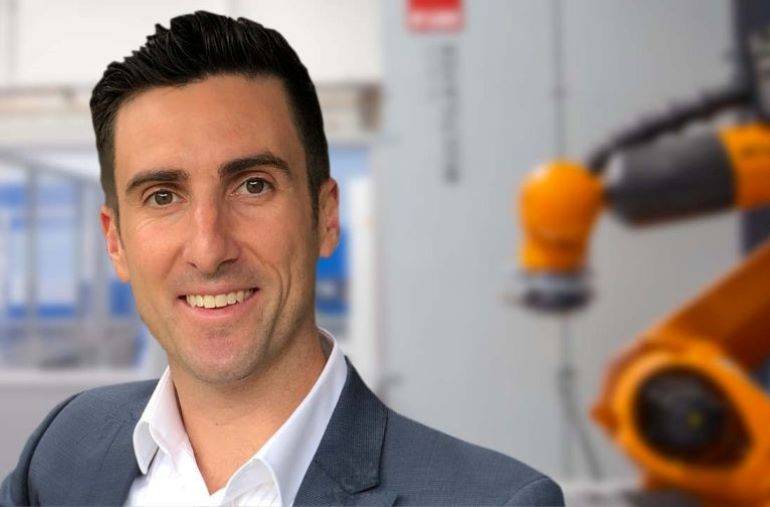

The Aerostructures Innovation Research Hub (AIR Hub) will bring together aerospace research, design, and manufacturing startups and experts to develop innovative materials and manufacturing processes for passenger planes, air cargo, and other solutions such as air taxis, as well as the space industry.
AIR hub Director Dr Adriano Di Pietro said researchers and industry will collaborate on real-world problems to develop the next next generation of air mobility.
“By using the latest technologies in digitalisation, automation and advanced materials, we will reinforce our industry partners’ position in the global aerospace industry and accelerate innovative technology development,” he said.
“This contribution to air mobility is vital to Australia’s future, connecting our people and communities.”
The hub is now on the hunt for aerospace research, design and manufacturing leaders and startups to join it.
AIR Hub’s industry partners Boeing, Quickstep, CableX, Furnace Engineering, Shoal and Marand Precision Engineering, plus research partners CSIRO, Monash University and Germany’s University of Stuttgart and ARENA 2036.
Facilities across Victoria, including the Swinburne-CSIRO Industry 4.0 Testlab for Composite Additive Manufacturing in Clayton and the manufacturing sites of key industry partners will support AIR Hub’s research and development activities.
Swinburne Vice-Chancellor Professor Pascale Quester said the AIR Hub will deliver a 30-year economic, employment and technology innovation boost for Australia and Victoria, by designing and manufacturing lighter, stronger and more competitive aerospace structures.
“Working closely with the aerospace industry, AIR Hub It will also accelerate electric clean energy vertical take-off and landing air vehicles – or eVTOL– more widely known as ‘flying cars’ or electric helicopters,’ she said.
“AIR Hub will also work closely with Swinburne’s Victorian Hydrogen Hub (VH2) to research and develop capacity for hydrogen storage on aircraft and eVTOL air vehicles, enabling them to make use of green fuels of the future to help meet global zero-emission targets.”
AIR Hub is working on ‘light-weighting’ and automating the production of space systems like the rockets used to launch satellites.
Light-weighting – manufacturing of parts to achieve better fuel efficiency and handling – has the potential to deliver major cost savings on every launch, opening up business opportunities in the lucrative global space industry for Australian companies. It would also mean unmanned aerial vehicles or drones could travel further to deliver supplies to remote places.
As part of the design and manufacturing process, AIR Hub will use AI, augmented reality, VR, machine learning and collaborative robots to support Australia’s world-leading capabilities to manufacture aerostructures.
Complex systems design firm, Shoal Group, has signed on to be part of AIR Hub. The company specialises in engineering solutions for complex systems with a long history in aerospace vehicle behaviour research, from experimental flight vehicles to space vehicle re-entry.
Shoal Group CEO Michael Waite said the company has a significant research track record in the fields of small satellites and quantum computing.
“Our partnership with Swinburne and industry will allow us to explore opportunities around hypersonics, advanced air mobility systems such as eVTOL aircraft, hydrogen propulsion, (AI) enabled design and analysis and space structures,” he said.
The AIR Hub is being developed with support of $12 million in funding from the Victorian government.

Simon has been editor of Startup Daily since 2019. He hosted the Startup Daily show on streaming service ausbiz.com.au from 2020 to 2023, and now, the weekly podcast Startup 360. He was previously associate editor of Business Insider Australia, a national restaurant critic, editor of The Good Food Guide, and newspaper proprietor during a 30-plus-years career in journalism and publishing. He’s also an investor in early stage startups.
Comments