


Canberra 3D printing startup Syenta lands $3.7 million Seed round to revolutionise electronics manufacturing


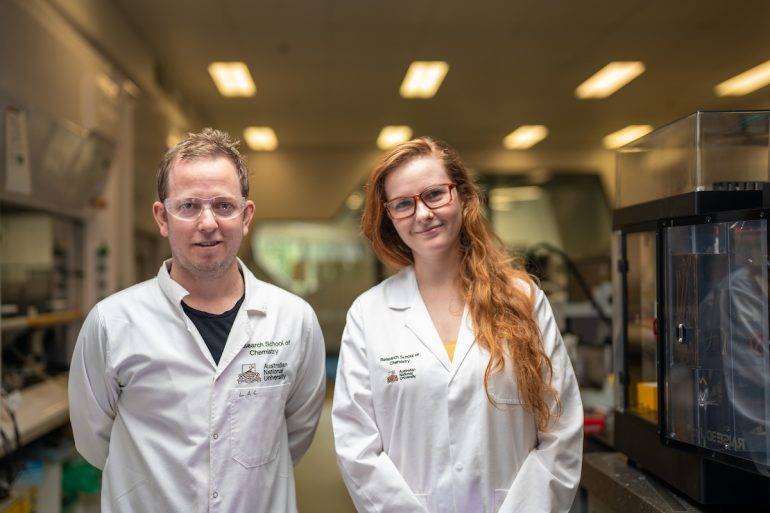

The round was led by Blackbird, alongside Brindabella Capital and Jelix Ventures.
The ANU-based startup spent two years in “stealth mode” as cofounders Jekaterina Viktorova and Professor Luke Connal developed a multi-material 3D printer using electrochemistry.
“Having experienced the limitations of state-of-the-art printed electronics methods firsthand, I’m excited to be working on a method that allows for true multi-material printing that involves fewer steps and less waste,” Viktorova said.
“Our additive manufacturing method is a key enabler of innovation in the electronics sector.”
The idea for Syenta came from a late-night email exchange between the pair describing a new way to 3D print structures. Users can print small electronics such as sensors and photovoltaics with it.
“In the two years since that first email between Luke and I, we’ve made incredible progress on our vision for Syenta – but we are just getting started,” Viktorova said.
“We can’t wait to bring this brand-new way of manufacturing to the world, starting with Australia.”
Prof Connal said Syenta is ushering in a new era of micro-fabricated and nano-fabricated electronics manufacturing, from a box that fits on a coffee table.
“We were trying to solve some fundamental problems to enable printing of metals and plastics at the same time. The day after the first email, we had a proof-of concept that we were onto something. From very early on we were convinced that this was potentially the basis of an impactful company,” he said.
“Syenta is democratising the electronics manufacturing industry by empowering its customers to rapidly design and construct electronics anywhere in the world. Using the Syenta printer, customers can rapidly fabricate and iterate in-house, building devices such as sensors, photovoltaics, batteries, PCBs, antenna, and yet to be imagined devices, enabled by additive electronics manufacturing.
“This is a brand-new way to manufacture. It means we can build electronics faster, cheaper and with less energy. These portable factories can be on our customers’ benchtop, removing the reliance of electronic supply chains.”
GreatCell Energy’s Paul Moonie, an early customer, and says the printer also improves the cost and performance of renewable energy.
“Syenta helped us pave a path to leap hurdles to deliver on high quality, best performing and low-cost, large-scale Australian made Perovskite solar cells,” he said.
“We’re excited of our future formal collaboration projects using their products and technical know-how to place us ahead of the field in Perovskite technology and product development.”
Blackbird cofounder Niki Scevak said that while the way we made electronics improved over the decades, innovative solutions are few and far between.
“Syenta’s new way of manufacturing electronics has the potential to reshape the electronics manufacturing market, and release the burdens on supply chains,” he said.
“We live for founders like Jeka and Luke, and are delighted to invest in their journey.”

Simon has been editor of Startup Daily since 2019. He hosted the Startup Daily show on streaming service ausbiz.com.au from 2020 to 2023, and now, the weekly podcast Startup 360. He was previously associate editor of Business Insider Australia, a national restaurant critic, editor of The Good Food Guide, and newspaper proprietor during a 30-plus-years career in journalism and publishing. He’s also an investor in early stage startups.
Comments